Of children aged 6–59 months are anaemic; 59.1% of adolescent girls aged 15–19.
NFHS-5, 2019-21, Ministry of Health & Family WelfareFOCUS AREA 05
Adopting government schools for full paediatric screening, and improving the environment the children learn in.
THE NEED — CURRENT DATA
Of children under five are stunted; 31.8% are underweight.
NFHS-6, 2023-24, Ministry of Health & Family WelfareChildren found with a health condition under RBSK school screening, to FY 2022-23.
Rashtriya Bal Swasthya Karyakram, MoHFWWhy it matters
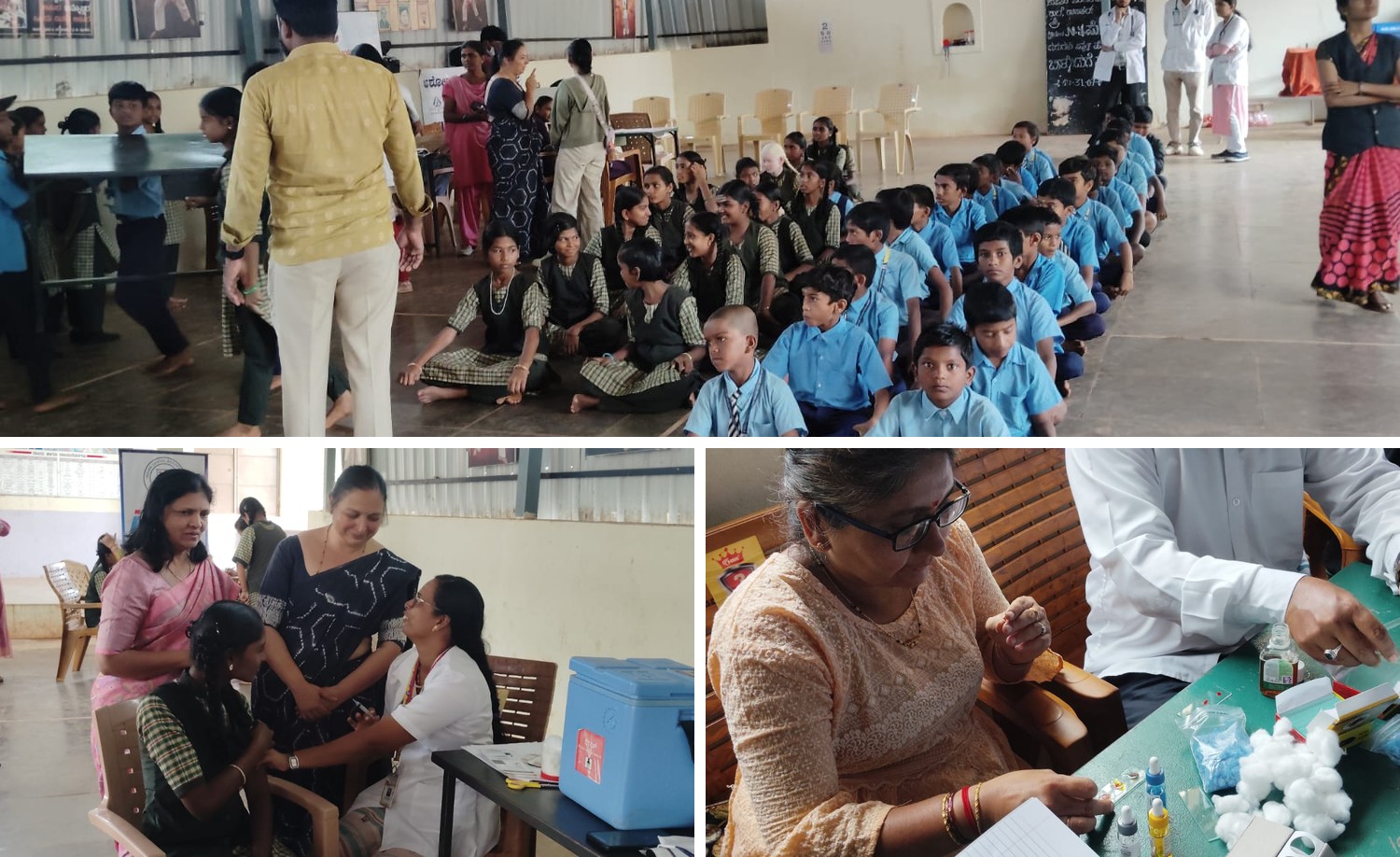
Good health and basic education are the right of every child. Many government schools still go without lighting, furniture or usable toilets — and their students excel regardless. Conditions that are cheap to catch early go undetected: most parents do not know their child's blood group, and untreated dental caries affects an estimated 43.3% of Indian children aged 1–9 (WHO Oral Health Country Profile, India, 2022). Working with a group of doctors, we adopt schools and screen every child.
How we help it happen
- Blood grouping, with results displayed in the classroom
- Eye check-up, spectacles provided, and follow-up on use
- ENT screening — otitis media in particular
- Dental check-up and hygiene counselling
- Paediatric examination for anaemia, malnutrition and valvular heart disease
- Solar bulb workshops and plantation on school premises
SOLAR BULB WORKSHOP
Power cuts run for days in the monsoon, and longest in slum areas. Class 9 and 10 students build their own solar bulb from materials we supply, learning the science and the energy-saving principle as they go — then take it home and study by it when the power fails. We also plant on the school premises, so the grounds are greener and the air is better.